
If your child is obsessed with building, taking things apart, or watching YouTube videos of LEGO robots navigating obstacle courses, you might be wondering if a robotics class is the next logical step. But with so many options out there, how do you find a program that actually teaches real skills and doesn't just eat up your weekend?
A great robotics program does a lot more than just teach kids to follow instructions. It turns curious minds into active problem solvers who can think through challenges, work with others, and build things that actually function. Whether you are looking at basic LEGO kits or advanced drone programming, knowing what to look for makes all the difference.
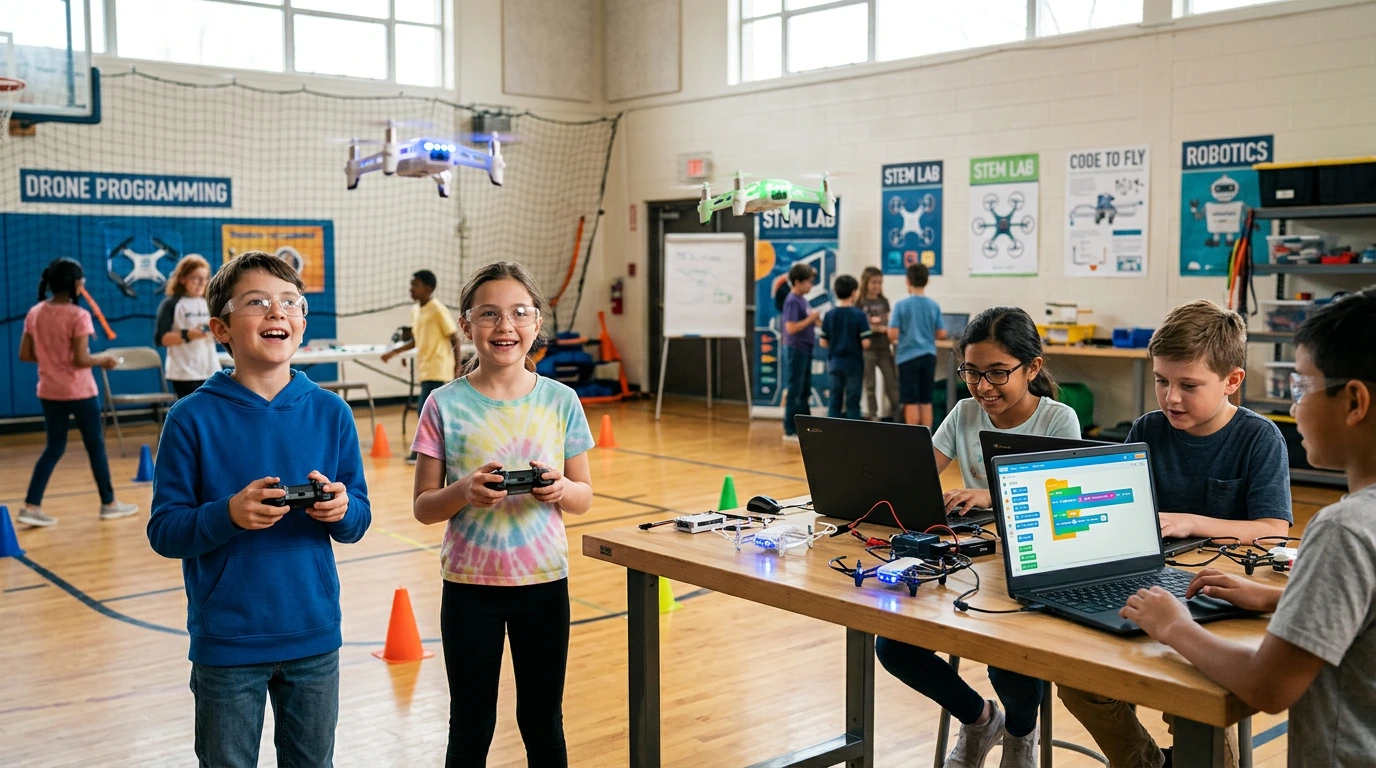
What Actually Happens in Kids' Robotics Classes
Active Building Instead of Passive Learning
A real robotics class starts with building. Students work directly with physical components like motors, sensors, wheels, and structural pieces to create robots that move and complete tasks. This is not about sitting at a computer all day. It is about understanding how mechanical systems work together in the real world.
In a typical session, children might build a robot that follows a black line on the floor, avoids obstacles, or even flies like a drone. They learn that if their robot keeps turning left instead of going straight, they need to adjust their code or check their wheel alignment.
Programming Concepts Made Simple
The coding side usually starts with visual programming languages like Scratch or intuitive LEGO interfaces. Kids learn logical thinking by understanding that if one thing happens, another action must follow. They discover that robots only do exactly what they are told, which naturally teaches precision and troubleshooting skills. As children advance, they might progress to text-based coding languages, but the foundation remains the exact same. They learn to break down complex problems into smaller and manageable steps.
Collaborative Teamwork
Most quality programs put a heavy emphasis on teamwork. Kids work in pairs or small groups, learning to communicate their ideas, divide tasks, and troubleshoot together. When one child builds a working robot and another struggles, they figure out the differences and help each other succeed.
Age Expectations by Development Stage
Ages 3 to 5: Exploration and Basic Concepts
Young children dive into cause and effect learning rather than wrestling with complex code. They might press buttons to make simple robots move or explore directions by guiding their creations around obstacles. These classes embrace short bursts of focused activity, plenty of movement between stations, and lots of practice sharing parts with classmates.
Ages 6 to 8: Introduction to Programming Logic
Children at this stage tackle more structured projects with enthusiasm. They grasp basic programming through colorful block interfaces, create robots that trace shapes or respond to clapping, and begin recognizing patterns in sequences and loops. Many programs weave in storytelling where kids might build robots that help characters in adventures or complete rescue missions. This keeps young minds engaged while they learn.
Ages 9 to 11: Complex Projects and Real World Applications
This age group can tackle longer projects, learn more advanced programming concepts like variables and functions, and participate in friendly challenges. They might build robots for specific purposes, like a pet feeding robot, a security system, or a device that sorts objects by color. The projects become more sophisticated, and kids start seeing real world applications for what they build.
Ages 12 to 14: Advanced Programming and Engineering
Teenagers can tackle text based programming languages, grasp engineering principles like gear ratios and torque, and develop projects that address real problems. They might program drones, create robots for environmental cleanup, or build automation systems. Many programs also introduce 3D printing and custom component design so students can bring their unique ideas to life.
Key Skills Kids Develop
Critical Thinking: Robotics naturally teaches kids to break down complex problems into smaller parts, recognize patterns, and create step-by-step solutions. These skills transfer directly to math, science, and everyday life.
Spatial Reasoning: Building physical robots helps children understand how mechanical systems work, develop spatial awareness, and grasp concepts like leverage, friction, and momentum through direct experimentation.
Persistence: When robots refuse to cooperate, kids discover how to test systematically, make adjustments, and try again. This process builds the kind of resilience and analytical thinking that helps them tackle challenges far beyond the classroom.
Communication: Team projects push kids to share their ideas clearly, truly listen to teammates, and find solutions everyone can support. These people skills often become just as important as any technical knowledge they gain.
How to Evaluate Robotics Programs
Look for Active Learning Over Screen Time
Strong programs get kids building and experimenting rather than sitting through long explanations. Children should spend the majority of their time working with actual parts, not watching instructors demonstrate or listening to lectures. When you look at a program, ask about their typical class breakdown. The best programs keep explanations brief and maximize exploration time.
Check the Approach to Failure
What happens when a robot refuses to cooperate? Strong instructors treat these moments as golden learning opportunities. They walk students through troubleshooting steps rather than swooping in to fix everything for them. Look for programs that celebrate experimentation and learning from mistakes.
Consider Group Size and Equipment
Smaller class sizes allow for more personalized guidance. Look for programs with instructor to student ratios that ensure kids get help when they are stuck but are not micromanaged. Additionally, well maintained equipment makes a massive difference. Quality programs invest in keeping their materials functional and completely up to date.
The CREATESPACE Academy Approach
At CREATESPACE Academy, our robotics classes emphasize building and experimenting over passive instruction. Whether we are hosting a birthday party, running a drone camp, or teaching a LEGO robotics course across Metro Vancouver, we believe in getting kids actively involved. Our students work in collaborative groups, tackling real challenges that require both technical skills and creative thinking.
We encourage children to explore robotics through projects that welcome experimentation. When robots do not behave as expected, our instructors walk kids through systematic troubleshooting. This transforms frustrating moments into breakthrough learning experiences. We know that STEM education thrives when kids stay engaged, work with their hands, and solve problems alongside their peers.
Finding the right program for your child does not have to be overwhelming. You want a program that matches your child's curiosity with appropriate challenges and supportive instruction. The best robotics classes do more than just teach technical skills; they nurture confident problem solvers who see challenges as opportunities to learn and grow.
If you are in Metro Vancouver and ready to prioritize active learning, teamwork, and fun, check out our birthday parties and camps right here at CREATESPACE Academy. Let's help your child start building, programming, and experimenting in a supportive environment.